
The fear of being replaceable arrives the moment competence becomes expected.
Early on, effort compounds. Output is visible. Progress is obvious. You do good work, people notice, doors open. Replaceability isn’t even a concept yet. You’re busy becoming competent.
The fear arrives later. Quietly. Usually after you’ve already “made it.”
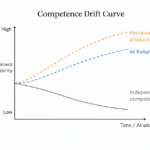
That’s when competence stops standing out. Everyone around you is good. Everyone delivers. The work still matters, but it no longer explains why you matter. Output becomes baseline. Perception starts carrying more weight than performance.
This is where the anxiety creeps in.
Not the fear of losing a job.
The fear of losing relevance.
Of becoming interchangeable. Of realizing that if you stepped away, nothing would actually break. Replaceability isn’t an economic threat at this level. It’s an identity threat.
So behavior shifts.
People start optimizing for being relied on instead of being effective. They become permanently available. Always responsive. Always useful. Not because the work demands it, but because absence starts to feel dangerous. Visibility becomes insurance.
A lot of “commitment” is just fear that learned to show up early.
That fear distorts judgment. Clean risks feel reckless. Disagreement feels unsafe. Stepping back feels like giving up ground. The safest move becomes staying indispensable in familiar ways—even when those ways no longer create leverage.
Here’s the irony: this makes people more replaceable over time, not less.
When your value is tied to constant utility, the system learns exactly how to work around you. You become necessary, but not decisive. Busy, but not defining. Important today, optional tomorrow.
That’s the trap.
And it tightens when identity gets involved. When being needed becomes proof of worth. When indispensability turns into self-image. At that point, replaceability doesn’t feel professional. It feels personal. Like erasure.
Here’s the shift that breaks the loop.
At a certain level, value stops coming from contribution and starts coming from judgment. From timing. From where you intervene, not how often. From being able to step away without panic.
The people who look least replaceable are rarely the ones trying hardest to prove it. They aren’t constantly visible. They aren’t urgently useful. They don’t treat presence like insurance.
They understand something most high performers resist:
being essential all the time is not the same as being valuable.
The fear of looking replaceable fades when work stops being proof of worth and starts being a choice. When being needed isn’t confused with mattering.
Replaceability isn’t always a threat.
Sometimes it’s the signal that your value has moved upstream—
harder to see, harder to measure, and much harder to substitute.
That’s not decline.
That’s evolution.