Most corporate presentations aren’t boring — they’re just painfully forgettable. You sit through 20 slides, nod at the right moments, maybe ask one question to look sharp… and forget everything five minutes later. Not because the data was wrong. Because nothing in that room actually demanded your attention.
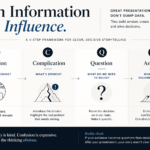
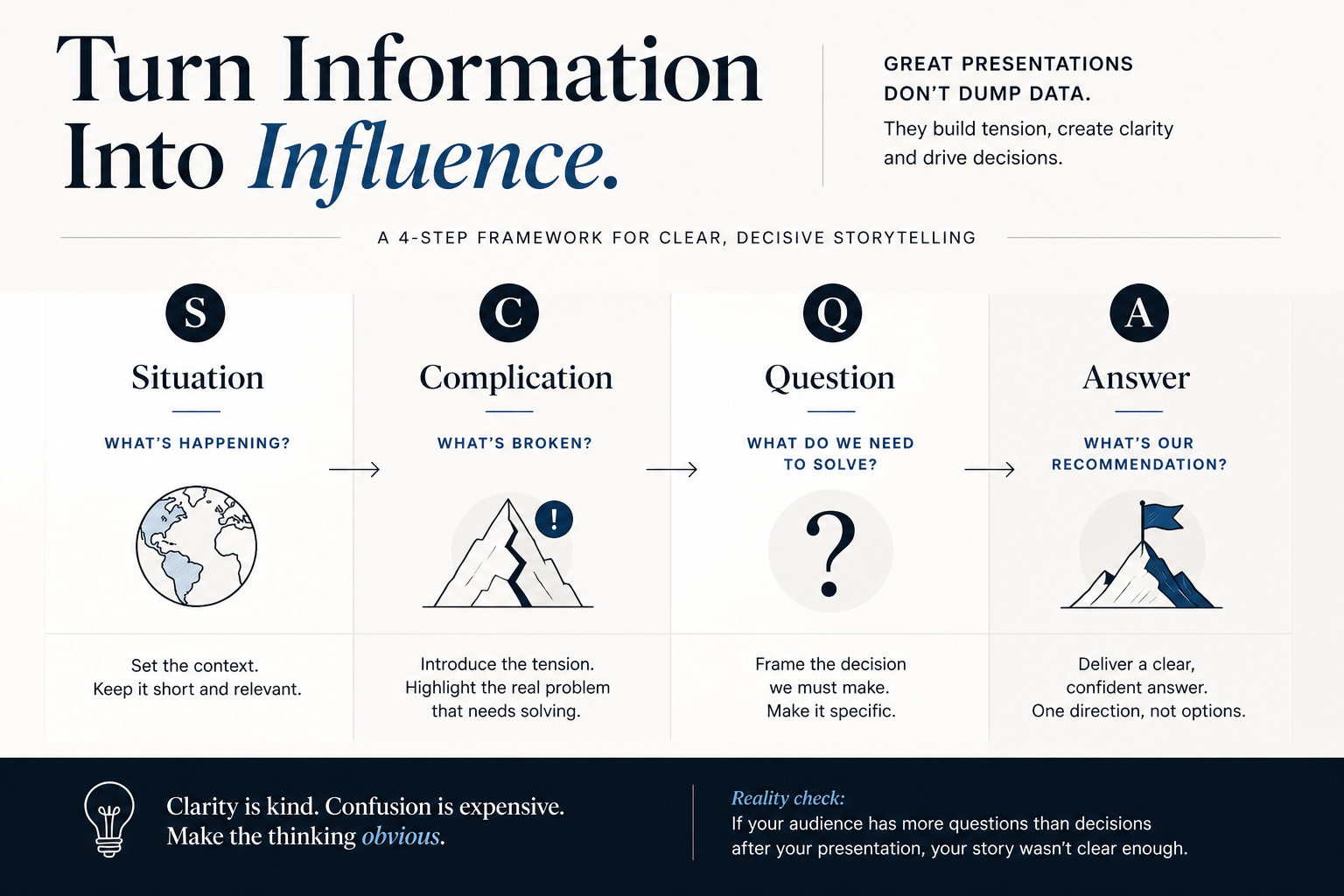
Here’s the part nobody wants to admit. It’s not your charts. It’s not your formatting. It’s your thinking. More specifically — how you’re structuring it. There’s a ridiculously simple way to fix this: Situation, Complication, Question, Answer. Four steps. Clean, logical, no drama. And yet most people butcher it.
They start with context. Endless context. “Here’s the market, here’s the trend, here’s what we’re seeing.” Five minutes in, the room is still waiting for a point. Then comes the “problem,” which is usually something soft and useless like “competition is increasing.” That’s not a problem. That’s just the world doing its thing. A real complication has bite. It makes people slightly uncomfortable. It sounds more like: revenue is growing, but margins are getting quietly wrecked because we’re discounting like idiots, and most of our growth is coming from customers who won’t stick around. Now there’s tension. Now people are paying attention.
That’s the whole game. No tension, no attention. If nothing feels broken, nobody cares about your solution. You’re just narrating spreadsheets to people who already have better things to do. The complication is what creates the hook, and most people water it down because they don’t want to sound harsh. Ironically, that’s exactly what makes the presentation useless.
Then comes the question, and this is where things fall apart again. “What should we do?” is not a question. It’s a shrug. A real question forces a decision. Are we actually growing profitably, or just buying revenue to keep the dashboard green? Do we double down on this segment, or walk away from it? Now the thinking sharpens. Now the room leans in.
And then the answer — which is where most people panic. Instead of making a call, they hedge. They throw out five “strategic options,” add some safe language, and hope leadership picks one so they’re not accountable. That’s not strategy. That’s fear dressed up as analysis. A real answer is uncomfortable because it commits. It sounds like: we stop chasing low-margin clients and focus only on segments where we can actually charge properly. Clear. Direct. Slightly risky. That’s why it works.
Here’s the uncomfortable truth. This isn’t a presentation framework. It’s a thinking filter. If you can’t clearly articulate what’s happening, what’s broken, what needs to be decided, and what you recommend, the issue isn’t your slides — you don’t have a sharp point yet. And instead of fixing that, most people hide behind more data, more slides, more noise. Classic corporate move.
That’s why most decks feel exhausting. They explain everything and conclude nothing. No tension, no clarity, no decision. Just information floating around, hoping someone else will make sense of it. Meanwhile, leadership is sitting there thinking, “Just tell me what matters.”
The irony is brutal. Senior leaders don’t want more detail. They want less bullshit. They want someone who can cut through the noise, call out what’s actually going on, and make the decision obvious. That’s what this structure forces you to do.
So next time you’re building a presentation, don’t start with slides. Start with the truth. What’s actually broken here? Not the polite version — the real one. If it doesn’t feel slightly uncomfortable to say out loud, it’s probably too weak. Because nobody remembers your slides. They remember the moment something clicked — when the problem was clear, the tension was real, and the decision was impossible to ignore. Everything else is just corporate wallpaper.